Sunday, 24 November 2013

Goole Times - Back in Time pictures

Back to the computer after the excitement of watching the Doctor Who 50th anniversary special last night. Even though I am not an avid fan I did enjoy it and even managed to understand it - although I am sure I missed lots of references to previous stories.

I thought I would upload some of the pictures which have recently appeared on the Back in Time pages of the Goole Times. This week's issue included some which, to be honest, I had forgotten I had submitted - one of harvesting was sent in August to coincide with the harvest this year !

However it is always interesting to put names to faces on some of the group pictures as even if I trace when the picture appeared originally often the individual names were not put in.

I am uploading them in small versions but if you want to order a bigger version or a print contact me through my Howdenshirehistory.co.uk website.

Goole British Legion ladies committee
from left Alice Holborough [ standard bearer], Gwendoline Robinson, Esme?, Bella Chesman, Avril Rockett,  Rene Lewis

Howden Brownies - around 1970

Bus trip from Goole Grammar school

Combine harvesting near Goole

Howden cubs around 1970


Sunday, 17 November 2013

Molly and a hedgehog

I have just come in from walking Molly. The leaves are beautiful this year and as yet it is still mild enough to walk in just a sweatshirt. I understand however that winter is arriving next week. Molly was on her lead as we passed a dead hedgehog on the roadside. A couple of days ago she was not and it took some time to wash off the smell after she rolled delightedly on top of it.

My old pictures often appear in the Goole Times but talking to a friend earlier in the week she asked when the pictures were going to feature somewhere other than Goole. A fair point and I shall try to submit some of the local villages such as Blacktoft, Holme on Spalding Moor,  Rawcliffe and the town of Snaith. I have hundreds of pictures but  am easily distracted by writing when I should be cataloguing!

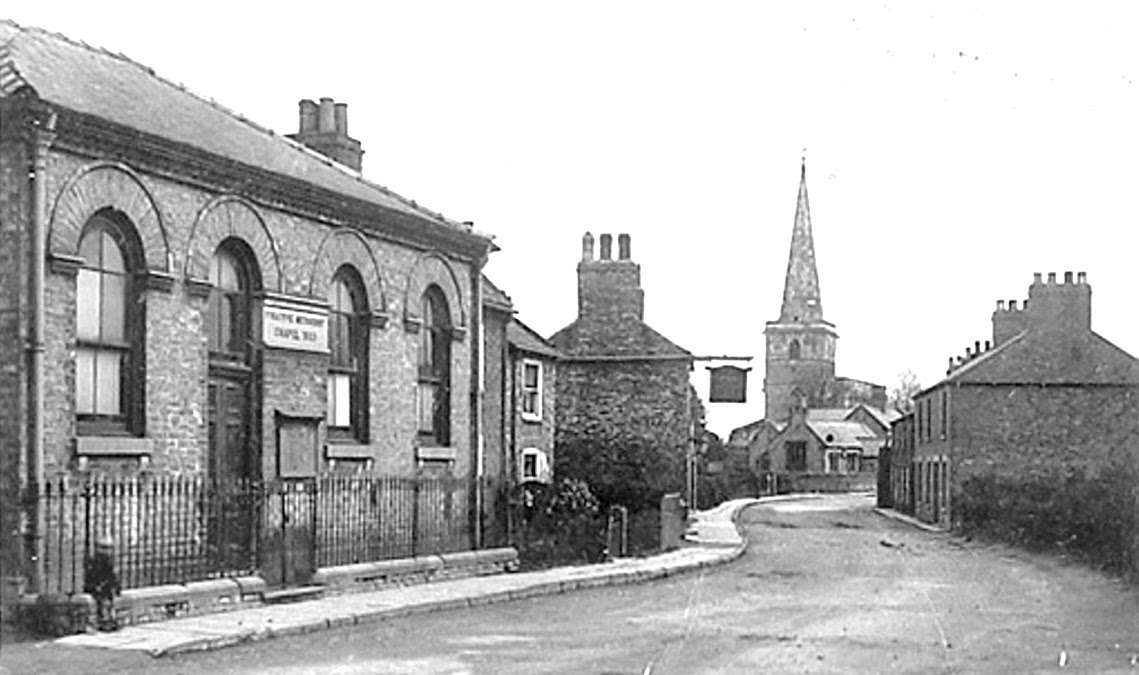
Some of my most recent acquisitions are pictures of around Drax  - long before it became famous as the site of the giant power station.


This is a view of the Drax Primitive Methodist chapel on the left and the Huntsman Inn a little further down the street.


Thursday, 7 November 2013

Howden airship trail

Time seems to fly by at the moment and it is well over a fortnight since I wrote anything. So here is a catch-up on local history matters.

First my friend Ken Deacon from Howden, expert on the airship R100, has come up with the idea of creating an airship trail in the town. His plan, backed by the Civic Society, is to embed plaques of the R100 airship, which was built near the town in 1929, along the Market Place to show how long this magnificent airship actually was. The trail will run from the corner of Market Place up to the Ashes Playing Field.

In order to fund the plaques, which have to be specially cast, Ken and the Society have made a bid to something called The People's Millions. The project has made it to the final and we are all going to vote for it on November 26th after it has been featured on ITV local news programme Calendar. The project with most votes wins the funds.

Read more about it on the Howden Civic Society site.

On Saturday 2nd November Goole library held a family history day which was very successful. I met many interesting people and found more information for our WEA current class project - the fish and chip shops of Goole!

At home the leaves are turning but are still on the trees. Autumn seems late this year and I hope we don't have any more strong winds here until all the leaves are off. We avoided most of  the much forecast storm, nicknamed apparently St Jude, but some of the tall ash trees rocked alarmingly.

Recently on Twitter many people have been viewing old pictures which have been restored and coloured to give them a feeling of immediacy. My friend Pippa has been doing this for some time and has had great success with both local scenes and people. It is amazing how an old cracked and damaged black and white photo can be brought back to life. Below is a sample of her work. Contact me through the website if you would like more details


We believe these men were Volunteers from the Goole area


Friday, 25 October 2013

A busy week

I am now able to relax a little after what has been a very busy week.

On Monday I gave a talk on how to trace your family history to the Holme on Spalding Moor history society. I have spoken to them before about Snowden Dunhill and about Saltmarshe and always enjoy it.

They are a very friendly group of people and  I think the talk went well - there were lots of questions which is always a good sign.

Their next talk is to be given by eminent East Riding historian Dr David Neave who will  talk on the Lords of Holme on Monday, 18 November at 7pm in the Scout Hut which is part of the village hall.  It is on the left hand side as you drive in the car park and has a separate entrance round the corner.

I hope to attend.

And then last night I was at Melbourne near Pocklington talking to the Pocklington Local History group about East Riding emigrants.

 I explained some of the reasons why people emigrated - ranging from the Puritans who left Rowley near South Cave in 1638 with Rev Ezekiel Rogers to create a new settlement - Rowley in Massachusetts,  to the Quakers of Knedlington who went a few years later to Delaware and right through to the young men and families of East Yorkshire who went to Canada in the nineteenth century to make a new life.

I am particularly interested in the last group as my own ancestor, Robert Nurse of Eastrington suffered the loss of his farm, took on the village pub, the Black Swan and then, as family lore has it,  drank the last of his inheritance. He then in 1832 took his family to Canada, settling near Port Hope where there was quite a community already established of local people who had emigrated 10 years earlier.

I have some letters from family members which describe the wonderful life in Canada and the difficult conditions at home in Yorkshire. No wonder Robert went. His descendants are still settled near Rice Lake.

Today I shall concentrate on keeping the Rayburn going and walking Molly in the rain.

Wednesday, 2 October 2013

Clifton Gardens, Goole

This last month seems to have flown by and now we are in October. The pond is still dry and although the grass had grown in some parts of the garden where it is under trees it was brown and flat when I gave it all a last cut.

I have been picking, eating and giving away apples. It is a good year in that there are lots of them and the eating varieties - Laxton Superb and James Grieve are quite sweet - but they are also smaller than usual.

I have now begun teaching my WEA local history classes in both Howden and Goole and in both there are plenty of students. Sadly however the class which I had hoped to run in Gilberdyke did not recruit well and so it has closed.

One of the topics which came up in the Goole class was Clifton Gardens, a street built in the 1890s and consisting of impressive Victorian houses.

Student Pauline Stainton searched the Goole Times files and came up with an interesting obituary for Frederick Chambers who lived at number 17 Clifton Gardens. She has transcribed it and I have included it below.


DEATH OF MR. F. CHAMBERS.

A WELL-KNOWN GOOLE ARCHITECT.

LOSS TO LOCAL WESLEYAN METHODISM.

        It is with deep regret that we record the death, which occurred on Thursday of last week, at his residence, Thorne Croft, Clifton gardens, Goole, of Mr. Frederick Chambers, L.R.I.B.A., architect and surveyor. He was 67 years of age, and had been confined to his house since October 1 as the result of a seizure.

       The late Mr. Chambers was a native of Hatfield. The family subsequently removed to Thorne and later to Goole, where his father was the owner of a number of schooners which at that time were the chief vessels sailing from the port. His son, however, had no inclination for a career connected with the sea, and after qualifying as a sanitary inspector and surveyor, he ultimately occupied each of these positions in turn under the local authority at Goole. He later became a member of the Goole Urban District Council and established an extensive practice as architect and surveyor, which he carried on upon to the time of his death at offices in Belgravia. During the war, in the absence on military duty of the surveyor to the Urban District Council, he occupied the position of consulting architect and surveyor to that body, and at the time of his death the firm was acting as architect to the Goole Rural District Council in the carrying out of their housing scheme.

 Among the numerous buildings designed by him were the Temperance Hall at Thorne, the Wesleyan Chapels at Reedness and Rawcliffe Bridge, and Ashfield, the residence of the late Mr.G.B. Wadsworth in Hook Road. He also took an active part as architect in the erection of houses in the more recently developed portions of Goole, notably in the Marshfield district, and his last work was the successful transformation of the Sailors’ Institute, Goole, into the local headquarters of the Y.M.C.A., a task which he carried out for the good of a cause which had his keenest sympathy.

      Mr Chambers was an active member of the Wesleyan body, and was closely associated with the church in Boothferry Road. He was a local preacher, and held every lay office in connection with the Goole Wesleyan circuit. He was a welcome attender at various church functions, and could always be relied upon to give a pithy and appropriate speech on any occasion. Interested in education, he served on the local education committee, and was a member of the governing body of the Goole Secondary School.

       An ardent student of archaeology, the late Mr. Chambers was well versed in the historical associations of the district, and he was also an authority on wood-carving.

       He leaves a widow, four sons and three daughters.


Goole Times 30 December 1920

Goole was an expanding and flourishing town in the 1890s and it is interesting to find out about the local architects and builders who gave us much of today's townscape.

One of the sons of Frederick Chambers was Herbert E Chambers, for many years headmaster of Boothferry Road school. Herbert's daughter Kathleen who died in 1990 taught music to many local children, including the late Frank Ella.

Wednesday, 4 September 2013

Life in Old Goole

 It has been a long hot summer and we have been busy moving lots of old local photos and newspaper files into their new home in my now restored old building.  Some are in very poor condition and will need careful handling if they are not to fall to bits but others are quite sound and make fascinating reading.

It is salutary however to realise how the years have passed as events of maybe 25 years ago seem quite fresh in my memory when I read about them.

I have come across some fascinating articles about the history of the Goole, Howden and Selby areas.  I  particularly enjoy the letters where readers reminisce.

Here is an extract from one which takes us back to the building of the 'new' Dutch River bridge in Goole, now itself replaced. It comes from  the Goole Times of 1966 and was written by an anonymous contributor who was then over 90. That means they were born around 1876!!


I was born in Old Goole opposite the bridge. I can remember the old wooden bridge, which used to open in the middle to allow ships to move through with their masts up. I also remember seeing the farmers' wagons, filled with hay and other produce, crossing the bridge. There was no other way for farmers and carriers' carts to bring farmers' wives to sell butter, eggs, and other produce from what we used to call the "low towns," as far away as Garthorpe, to Goole.

It was considered a long way in those days, with bad roads and an uncomfortable ride, which was not too kind on the ladies' dresses.

Many a time I have seen a load of hay stuck in the middle of the bridge, so that the hay had to be unloaded before the horses could pull the wagon through.

Then, I remember, there was a temporary bridge built which must have been used at !east until the present one was built. I also remember, many years afterwards, when I was married, watching Barnum and Baileys' circus crossing the bridge. It really was an anxious  moment, for we actually saw the bridge bend under the weight of the elephants

The circus was held in what used to be Corner's Field. It was wonderful for for we "Old Goolites," for we were almost cut off from the town. Mariners Street was a cul-de-sac and we had to go down  St John's Street, passing by the old Free Church, to the station. 

Old Goole used to be a tidy, even pretty, spot. It was delightful to look down on the moonlit river in the evenings, or take a walk on the river bank.

At our side of the bridge was Blyth's horse-shoe shop, where there was always a delightful fire. The children used to gather round to get warmth from the fire in winter, and watch the Blyth brothers make horse-shoes. 

I also remember Old Goole School- just one big room with boys and girls mixed, plus a small infant school, where Miss Morley was headmistress. Cottingham Street was a cul-de-sac, with no buildings except the entrance to Thorpes' farm. Mr. Thorpe used to drive into Goole every day and whoever opened the gate for him received a penny or a halfpenny, but we youngsters hadn't a chance
with the big lads. We had great times playing on the sand heaps while the builders were enlarging the school and building the schoolhouse, in which I was to spend so many years of my married life.
But it is fatal for someone over 90 years old to look back.

I would love to know who the writer was. Below is a picture of the bridge which explains why carts sometimes got stuck.

The old Dutch River bridge, Goole

We have now updated our Howdenshirehistory.co.uk old photo pages with some new content and an easier way to order. More new photos will be added on a regular basis.


Monday, 12 August 2013

Dog days

Suddenly it is early August and the garden is beginning to look autumnal. I have just been cutting the grass in the part of the garden where I hang out washing. Every so often my foot went into a soft patch of soil and the lawnmower balked. It is the moles which have returned. I do not really mind them but would prefer them to be elsewhere!

It is still very dry - the duckweed in the pond is brown and clinging to the damp part at the very bottom and when we were digging potatoes yesterday  they were much smaller than normal. Perhaps they would have benefitted from more water - and perhaps some old fashioned 'muck'.

But the apple trees are covered in fruit and the self sown brambles near the shed are soon going to  be ripe enough to be made into pies. I know that strictly speaking the bush is the bramble and the fruit  is the blackberry but as a child we always called them bramble pies and so I continue to do so.

Friends have been helping us convert an old brick workshop into somewhere to store historical objects and pictures. It has been hard work - although my contribution has largely been tea-making and enthusiasm as clutter has been removed, a floor laid and wiring put in to reveal a lovely building which has been long neglected.

Below is a picture of Molly who first appeared on this blog as a small puppy. Now two years old she is a good-natured and fairly obedient companion who likes nothing better than mooching around with us outside and trying to creep onto the settee in the house.

Sunday, 21 July 2013

Airmyn and Hook churches visit

Last week,  members of my WEA history groups and also members of the Holme on Spalding Moor history group, visited two local churches.

We began by visiting Airmyn church where local expert David Galloway explained the history of the church to us.  The church is dedicated to St David, an unusual dedication in Yorkshire and is believed to be the second church on the site.

We then visited Hook church, St Mary's, where, before the opening of Goole parish church in 1848, the many inhabitants of the new town of Goole came to be 'hatched, matched and despatched'. A small and simple building Hook is today once again a village church.

The churchwardens here were very welcoming and we all enjoyed the tea and delicious cakes. Inside the church is a plaque recording its restoration in 1844.

This was reported in the Leeds Intelligencer of May 1844 as follows:


The small church at Hook, near Goole. has undergone considerable repairs and restorations both internally and externally, which have been executed in a simple effective, but characteristic manner under the direction of Messrs Hurst and Moffatt, architects of Leeds and Doncaster.

 Much care and attention has been paid to having every part correctly restored, an aim in which they have been ably seconded by the Rev. J. Paley, the Incumbent; and aa a whole this little edifice may be pronouneed a model of what a parish church ought to be in a rural district.

 The necessary funds have been obtained partly by rate and partly by contributions but chiefly from the liberality of T. H. S. Sotheron. Esq., M.P. for Wiltshire and one of the landed proprietors of Hook.


An old postcard view of Hook church


Percy Jeeves of Goole - new book

In an earlier post I mentioned meeting the biographer of Percy Jeeves, professional cricketer whose name was used by P G Wodehouse for his famous butler.

Percy Jeeves was brought up in Goole and learned his cricket there. I read and enjoyed an early draft chapter of the book which describes Jeeves' life in Goole and the matches he played locally.

The book by Brian Halford is now published and I am including here a link to a review  from the Birmingham Post

http://www.birminghampost.co.uk/lifestyle/nostalgia/dennis-amiss-brian-halford-tell-5119219

Next year in particular when we all remember those from Goole and area who lost their lives in the First World War Percy Jeeves will be in our thoughts.

Friday, 12 July 2013

The Birks family and Goole Fields mill

I have recently been finding out more about the Birks family who were millers in Goole throughout most of the nineteenth century.

Thomas Birks, son of John was a farmer until 1815 when he became a miller at Goole. I think that he may have taken over what was formerly known as Broadbents' mil, a smock mill which stood on the riverbank where Goole docks is today.

He had to move in the 1820s when the Aire and Calder Co. began building their new canal and docks exactly where his mill stood. So he moved to the other side of the Dutch River and built a new windmill near what we now know as Old Goole, on Goole Fields. It is still there.

Sadly Thomas died in 1828 leaving his widow Hannah, nee Colbridge to run the mill.  She eventually married William Greenfield, also a miller but he was killed when he took hold of the moving sail and was carried up in the air before falling to the ground.

But by then Hannah's son, Thomas Gilderdale Birks was old enough to take over running the mill. He continued milling until in his turn his son, another Thomas Gilderdale Birks took over. This third Thomas was particularly interested in the natural history of Goole Moors.

He was an enthusiastic member of the Goole Scientific Society and its recorder of botany. He studied the algae of Goole and Thorne moors and was a founder member of the British Mycological Society, and the Yorkshire Naturalists Union.

In 1883 he was offering 'Andromeda, the three Droseras, pllujarla, and many other rare flowering plants, characeae, algae, diatoms, desmids, micro- fungi, plants for freshwater aquaria and well-mounted slides in exchange for books on natural history, cabinets, slide boxes,
or apparatus.'
Anyone interested was invited to reply to Thomas Birks, jun., Old Goole Mill, Goole.

By 1899 he had moved from Goole to become the manager of the Cleveland Flour mills but still returned to Goole to study the moors. In 1911 he was living in New Southgate, Middlesex, a corn dealer and shopkeeper.

In 1911 both William Gawtry, a waterman and William Phillipson , a jobbing gardener gave their address as the Mill House, Goole Fields.

If anyone can add any more to the history of either the Birks family or the mill I should be pleased.