Tuesday, 20 June 2023

Old pubs of Howden

 I am sitting here listening to the welcome rain. The garden was bone dry and everything was drooping. In particular the potatoes needed the water as the roots we have tried are the size of marbles. Gardening can be very frustrating and I am not best pleased at the moment as I was watching some calabrese and tender stem broccoli in the raised bed and thought how well it was doing. It was well netted but somehow a pigeon got in and in a short time decimated the plants. I am not feeling charitable towards pigeons at the moment.

This afternoon I am going out with the history groups I belong to to visit Nunburnholme church. We plan a few visits over the summer and enjoy learning about new places as well as meeting up with old friends. I am also looking forward next week to a concert in Howden Minster by celebrated young  pianist Jeneba Kanneh-Mason. It has been organised by Howdenshire Music whose high quality free concerts are really putting Howden on the musical map.

I have spent the last couple of weeks working on a booklet about the old pubs of Howden which is to be published in early autumn by the Howden Civic Society. Geoff Taylor, another member of the society and I  have been researching the various inns and Geoff has been taking contemporary pictures to go with my old ones.

Howden has always been known for having a large number of pubs, inns and beerhouses, largely because it was the centre of the local Howdenshire area where villagers came to visit the shops and markets. And also Howden hosted an annual world famous horse fair where buyers and sellers came from all over the UK and Europe to buy horses for many purposes ranging from hunting, pulling cabs in cities and in particular for use in the army. 

Our booklet is in the form of a town trail and includes 24 pubs - or pub sites. Some of them are a challenge to research as a new landlord often meant a new pub name. Charles Ledsham, for example came to Howden as the landlord of the Black Horse in Bridgegate in the 1820s. Having fought heroically and been wounded at the Battle of Waterloo he renamed his pub  after the battle. But when he moved to new premises in Hailgate the Black Horse reverted to its original name.

Around the same time the White Hart became the patriotically named Wellington whilst the Grapes in Bridgegate became the Britannia.

The civic society will be having a stand at Howden show on July 2nd. Come along and say hello. And if you have any memories or old pictures of Howden pubs you would be doubly welcome!!!!

 The white building on the left was once the Spotted Cow inn. It later was a lodging house and is now private housing.


Sunday, 7 May 2023

The Coronation

 Yesterday I was glued to the television as I watched the Coronation ceremony. It was not so much the processions in the rain but the actual events in the abbey that fascinated me. Although as we know there were many modernising touches the historical symbolism and actual artefacts were stunning. As King Charles sat in the wooden Coronation chair I could not but think of the other kings and queens had sat in /on it all the way back to probably Edward I.

But Howden Minster was a good stand in for the Abbey on Friday!  It was beautifully decorated with an  impressive banner by Howden School pupils. The school children processed in and out and sang the National Anthem and the WI ladies served lovely cakes during the day. And in the evening I attended a Coronation concert there - braving a thunderstorm to do so.

I throughly enjoyed the first half,  hearing Crown Imperial on the magnificent organ and the performance of Zadok the Priest with Matthew Collins again on organ with the augmented Minster choir.

The talented Howden School band, The Soleros were up next, followed by Howdenshire Music's Boglarka Gyorgy and Amy Butler on violin and piano playing a very well-received Gershwin arrangement.

The interval gave us the opportunity to chat with friends. After a performance by a gospel choir we returned to the rather wet streets of Howden. 


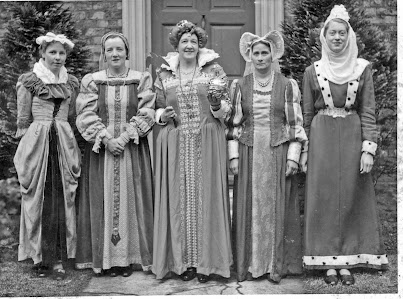
Howden ladies dressed as queens of the past in 1953 - tentatively named as Eileen Holliday, Mrs Barnes/ Mrs Winn, Noreen Milnes [ hairdresser], unknown, Rita Sheppard [from the White Horse].

Saturday, 22 April 2023

A village funeral


It's gardening time now and we have managed to get in some onions and potatoes. I still have tender stem broccoli and Swiss chard in the greenhouse but today it has turned colder and drizzly and  it's not encouraging to spend a lot of time outside.

Yesterday afternoon I attended the funeral in Eastrington church for Dolly Atkinson,  a lady I had known all my life. She was 98 and the church was full as we celebrated her life. Like probably everyone there I had eaten her famed teacakes and we heard how, after growing up and working on the family farm she had moved to a bungalow in the village and had been a stalwart supporter of both church and the village hall. It was both a comforting and uplifting service.


 In the [old] village hall. From left Greta Atkinson, Betty Hoggard, Dolly Atkinson, Mrs Wilburn 


A winning Eastrington school choir in 1936 on the steps of Hull City Hall. Dolly Atkinson with fringe and wearing a summer dress is on the extreme left. My aunt Jean Nurse [Sellers[ is  on the front row, left of the boy with a short sleeved shirt.

On Easter Monday I gave talks and tours at what turned out to be a very popular Howden Minster open day.  There is a lot of history to cover [!!] so I just  mentioned the highlights ranging from John who sat up in his coffin at his funeral to the possible visit of Parliamentary troops to the church in 1644, the collapse of the choir roof in 1696 due to lack of maintenance and the disastrous fire of 1929. And of course we looked at the Coronation window which was installed in 1953.

Then last week I gave two talks - on the same day - about the history of the Saltmarshe family and the village.  The first was to the ladies of Hook WI who were having afternoon tea in Saltmarshe hall. They were a very friendly and lively group. In the evening it was the monthly meeting of the Boothferry history group in the Courtyard in Goole. It was a challenging start as the overhead projector there failed to work - and not for the first time - but I had brought my own projector just in case and after setting that up all went well.

Tonight I am attending a concert in Snaith  Priory church by the Beverley Male Voice Choir which also includes performances from Shakespeare by local poets. Should be a good evening.


Sunday, 12 March 2023

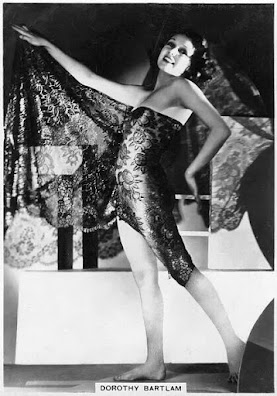
Dorothy Bartlam

 Last week  was  International Women's Day and a local facebook post mentioned Goole born  film actress Dorothy Bartlam. Dorothy starred in several films in the late 1920s and early 1930s and there is much information about her film career on the internet.

The local history group that I attend on Thursday mornings had talked about her and one of our members has carried out a lot of research on Dorothy and her family and her Goole connections.  So I thought I would include a brief summary of his work here.

Dorothy Ezard Bartlam was born 8th November 1897 at Leighton, 2 Airmyn Road (then known as 173 Boothferry Road), Goole and baptised on 25th November at St David's, Airmyn. Her parents had married in the same church 1st June 1895, her father having recently come to Goole to enter into an ironmongery partnership with George Thompson. 

Her father, Charles Ruby Bartlam, had come from Ironbridge, Shropshire, where he had been an assistant in his father's ironmongery. Dorothy's mother was Henrietta Ezard, who had been born in Earswick Station House. Her father was the station-master. Henrietta was the younger sister of Herbert W Ezard. In 1913, when Dorothy was around 6, the ironmongery business was dissolved and the Bartlam  family moved to Torquay where Charles opened his own ironmongery. 

As a young woman, Dorothy won several beauty competitions and found casual employment in the film industry as a "crowd extra." It did not take long for her to be cast in more prominent roles and soon to become a "star." Film reviews in the national press sometimes referred to her as “the girl from Goole” or “the Yorkshire actress.”When she married David Rawnsley, the film art director, in September 1933, the wedding photo appeared in the Sunday newspaper "The People."

As Mrs David Rawnsley, her portrait was shown in the National Portrait Gallery, she was featured on cigarette cards and appeared extensively in advertisements for Pond's Cold Face Creams 


This is  Dorothy Bartlam (1907-1991} as shown on a  cigarette card from Modern Beauties, 4th series, issued by the British-American Tobacco Company.

Some extra information which might be interesting

Bartlam and Thompson were in business at 106 Boothferry Road. The partnership was advertised in 1901. After the Bartlams left Goole George Herbert Thompson continued the business at 106 as ironmonger and plumber until at least 1920. 

Bartlam and Thompson had their shop at 106, Boothferry Rd in the block on the left

Before he married George lived with his widowed mother Martha at 186 Boothferry Road. She died in 1933

Dorothy Bartlam's mother Henrietta Ezard was the sister of enterprising shipowner  Herbert W Ezard. He  lived at 'Haxby'  [4 Airmyn Road/ then 175 Boothferry Rd] which he built in 1907. His initials HWE are over the door.

He died in 1938 and his obituary is below

1938 DEATH OF H. EZARD Former Goole Shipowner and Local Preacher The death has occurred of Mr Herbert Wm. Ezard, aged 68, of White House, Stepney-drive, Scarborough, a former Goole shipowner, and for many years a promiment local Methodist. Mr Ezard was only 21 years of age when he formed his first shipping company, the Goole and West Riding Steamship Company. Later he became managing director of the Yorkshire Coal and Steamship Company, and was also a principal the firm of H. and C. M. Ezard, shipbrokers and coal exporters. For years he was a lay preacher, and while at Goole was closely associated with the North - street Methodist Church. He had been twice married, and leaves a widow and two sons. The funeral took place at Goole Cemetery.

In later years Dorothy turned to writing and her first novel was published in 1931. She seems to have retired from acting following her marriage in 1933. The divorce was in June 1936. The 1939 register describes her as "divorced writer," living at  Mockham Down, Brayford, Devon {a large detached rural property}.She seems to be living there alone.

She married Maurice Gleeson in 1946 (in 1939 he was described as "chef and waiter") and remained Mrs Gleeson until she died. Whenever she was mentioned in any newspaper article (usually in connection with dogs) she was just Mrs Gleeson.

Our Thursday morning group  is very friendly and we never know where our researches are going to take us. We have never yet run out of things to talk about! And it is fascinating to find out more the many interesting people of Goole.


Wednesday, 15 February 2023

Howden Minster open day

Last night I gave a talk to Gilberdyke WI and on the way home, through thick fog, saw a badger run across the road in front of me. I know they are around but only see them infrequently and was surprised at how fast this one ran.  The only other wildlife out was  a solitary rabbit. It was good to get home although I didn't need supper as the ladies of the WI provided a lovely buffet.

I am busy at the moment refreshing my knowledge of the history of Howden Minster. I am taking tours around the church on Easter Monday, 10th April when the Minster is having an 'open day'. The idea is to show off the church to everyone, young and old, locals and visitors. There will be old photographs, archaeological discoveries, refreshments from That Tearoom, musical interludes on both piano and organ and activities for children including brass rubbing.

Howden Minster has always been at the centre of the town and driving home its beautiful lantern tower and green roof are the signs that you are nearly there. Many travellers in the M62 are attracted by its beauty and increasingly are stopping off to visit both church and town.

What follows is a very very brief summary of the church history - come along on Easter Monday to find out more.

It is believed that there was a church here in Saxon times although the written evidence is a little uncertain!  A twelfth century chronicler, Gerald of Wales wrote several centuries later that

"In the north of England beyond the Humber, in the church of Hovedene, the concubine of the rector incautiously sat down on the tomb of St. Osana, sister of king Osred, which projected like a wooden seat; on wishing to retire, she could not be removed, until the people came to her assistance; her clothes were rent, her body was laid bare, and severely afflicted with many strokes of discipline, even till the blood flowed; nor did she regain her liberty, until by many tears and sincere repentance she had showed evident signs of compunction."

Osred was king of Northumbria and died in 716 AD . There is nothing more known of Osana beyond this mention but it does suggest evidence of an early church at Howden.

We are on more certain ground with the knowledge that the church was mentioned in the Domesday Book of 1086 and eventually, when Howden became associated with the bishopric of Durham it became very important.

In 1267 the church became collegiate - ie a college of priests was set up and thereafter much building took place until a magnificent church, with a beautiful chapter house and its own song school dominated the landscape. Around 20 priests lived in Howden, some in separate prebendal residences on Churchside and some in the bedern [like a sort of hall of residence] which was where Parson's Lane is now. And there were too regular visits by the bishops to Howden when they stayed in their palace and where at least two kings  [ Edward II in 1312 and Henry V in 1421] were hosted

The church became a place of pilgrimage after a supposed miracle took place at the funeral Mass of John of Howden in 1275 when he apparently sat up in his coffin to receive the Host. He was an eminent poet and philosopher and had been chaplain to Queen Eleanor of Provence, the wife of Henry III

Although never officially created at saint he was held to be one and of course St John Street leads directly to the Minster. His shrine was in the centre of what is now the ruined choir

So many pilgrims  visited Howden that enough money became available to build a new choir and raise the height of the nave. We can still see the old roof lines both from the Market Place and inside the church.


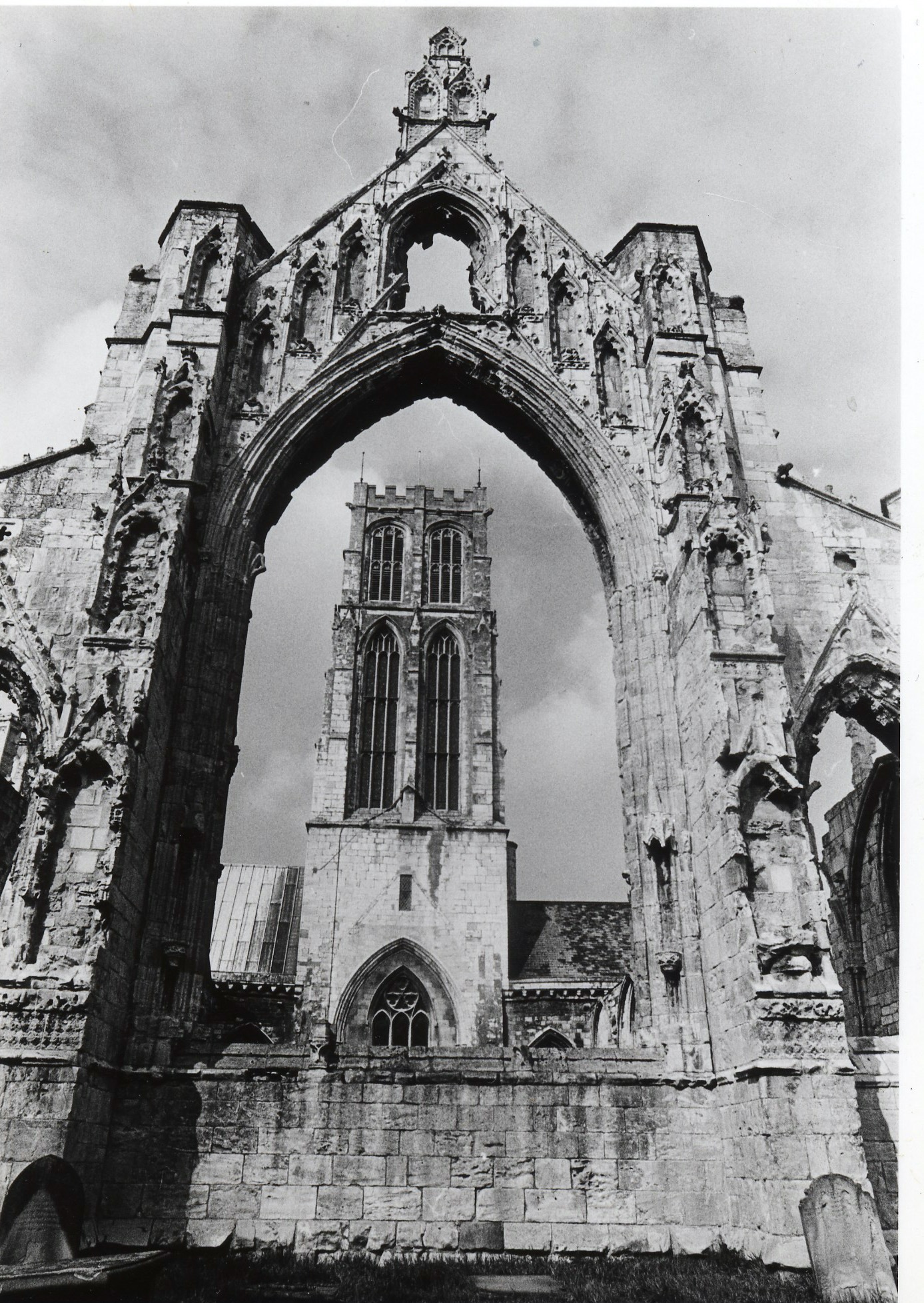
 View from the Market Place showing the ruined choir and the older roofline

But then came the Reformation and Howden became an ordinary parish church. No one repaired the choir and in 1696 the choir roof and walls collapsed in a storm. The chapter house roof went the same way in 1750. But the choir was totally ruined and it is hard to imagine what the church must have looked like when it was complete.

Many repairs were made to the church in the nineteenth century and then in 1929 a disgruntled farm worker set the tower on fire. A lot of damage was done both by the fire and by the water used to extinguish it by the firemen. The alarm was said to be have been given by a sea lion from a circus parked in the Market Place. It took three years for the repairs to be complete.


  The dramatic and awful sight of the tower on fire in 1929

There is lots to see inside the church today, some lovely stained glass and statues as well as memorials to many Howden families.  And do not forget to visit Peter de Saltmarshe, lying in his armour in the centre of the Saltmarshe chapel with a dog at his feet to symbolise loyalty.


This  is a picture of the Minster choir in 1982.


Sunday, 22 January 2023

Farming, Ropewalk and Skating

 It is cold and foggy today but I hope we are soon going to see the last of the hard frosts and the chickens will not then need jugs of hot water twice a day. Our snowdrops are just showing white and the daffodils are well up. The woodpecker is busy hammering in the large ash tree seemingly all day and last night I  heard two owls calling. So nature at least thinks we are heading for spring.

On the history front too the new year is off to a very busy start.  I spent one Wednesday evening at the Wellington in Howden speaking to a large group of  Howden Young Farmers.  My talk was about local farming and how it has changed over the last hundred years. I have always been interested in particular about how cleverly nineteenth farms were designed with, for example, stables facing east so that horse lads could see what they were doing -feeding and preparing the farm horses for work as the sun rose.

And on Monday afternoon the local history group resumed meetings in the Scholfield Memorial hall at Skelton. There was a good attendance and my pictures of Eastrington went down well I thought. The next meeting will be about Portington, Ousethorpe, Hive, Sandholme and Gilberdyke. If you are interested in coming please contact me on howdenshirehistory.co.uk

Then at short notice I was asked to stand in at the meeting of the Howdenshire Archaeological Society as the speaker was unavailable. Not being an expert on archaeology I talked instead about how Howden has changed over the years.

But perhaps one of the most interesting meetings I have been to this month was the small research group which meets in Goole on Thursday mornings. Earlier this year the Goole museum publicised an album of old photos they had been given which showed some lovely Victorian photos of Goole.

This was not new to me as a friend and I had been shown the album some years ago and had been given permission to copy it. But the Thursday morning group had not seen the pictures and so we have spent a couple of weeks looking at them

The earliest picture shows the newly built Pomfret and Goole lifeboat visiting Goole in December1865 before being put on station on the mouth of the Tyne.

Some of the pictures are taken from the top of the water tower and one shows the town rope walk and how therewas no direct connection then between Bridge Street and the town centre. Goole has changed a lot.


We have also been trying to find out who took the photos but with no definite results. But we do have  some dating evidence. An extract from a photo of the old Goole Times shop [beautifully coloured by my friend] dated 1896 shows some of the pictures for sale - look at each side of the main windows.


Another of the photos showed Carlton fish ponds and we discussed how they were used well into living memory for ice skating. By coincidence some lovely pictures on the same topic have been added to the Snaith facebook group and here is one, with acknowledgement to Chris Robinson - in the pram!!


Saturday, 31 December 2022

Happy New Year

 I am writing this on a gloomy Saturday afternoon, the last in 2022 and the last day of the year.  We have had great heat and extreme cold - I hope that 2023 will bring calmer weather. My snowdrops and daffodils are well up  and, as my mother used to say when she wrote Country Notes in the Goole Times. every day is ' a cockstride lighter'.

I am looking forward to seeing friends in both Skelton and Goole history groups which resume in a few days but in the meantime  I have been busy sorting out old photos.  I have put 60 of them into a slideshow which I hope will work.  They are a varied selection from some of the local villages - some coloured and others left black and white. They are by no means all I have of the villages included but I hope they will entertain on this New Year's Eve. 


Best wishes for 2023.


Saturday, 12 November 2022

Eastrington

 Now it's November and although the leaves are still on the trees it is time to light the log burner in the evenings.  We are still picking up windfall apples- which the pheasants are enjoying too - but soon surely we will have a frost and they will get frozen.

This blog post is about Eastrington, the village where I was brought up and my ancestors inhabited for  well over 350 years.

I have always been interested in local history and some few years ago now wrote a comprehensive history of the village which I have sent all over the world to descendants of Eastrington residents. I still have plenty of copies for sale. You can buy them either from Chappelows in Howden or the hair salon in Eastrington

 I have recently kindly been given a lot of pictures by Mrs Doreen Wilde who has moved away from Howden and wished her pictures to 'stay local'. Mrs Wilde, before her marriage to Frank, was Doreen White and was brought up at Eastrington brickyard. Her parents, Cecil and Louie lived there and Cecil ran the brickyard, succeeding his father Walter.  

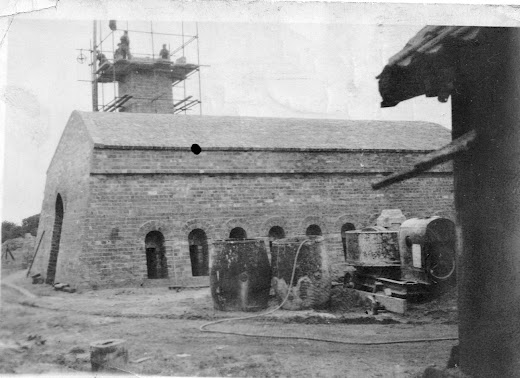
The brickyard at Eastrington had come into being when the Hull and Selby railway was built  [it opened in 1840] and  a seam of clay was found during the construction. The land, Stone bridge close, which  became the brickyard, had once belonged to my ancestor George Wise Nurse who built and lived in The Laurels.

An early owner of the brickworks was Richard Graves, a Broomfleet brickmaker who built two cottages on the 10 acre site. He sold it to John Watson in 1855 who was the older brother of George Slater's wife Jane. George and Jane  already lived in one of the cottages and  lived at the brickyard for the rest of their lives.

The brickyard remained in the extended Watson family until it was bought by another brickmaker Johnson Ducker of Melton in the parish of North Ferriby.  Johnson's daughter Elizabeth had fallen in love with a young railwayman, originally from Devon called Walter White. The young couple married in 1896 and their son Stephen Ducker White was born in 1897, followed by Maria and Dorothy.

Walter was still working as a signalman but soon afterwards his father in law bought the Eastrington brickyard and the family moved there with Walter Cecil and Catherine being born at the brickyard.

Then came the First World War and Stephen joined up. He was awarded the Military Medal as reported in the Hull Daily Mail of  29th December 1917.

EASTRINGTON'S FIRST MILITARY MEDALLIST. Bombardier Stephen White, R.F.A., M.M. son of Mr and Mrs W. White, Stonebridge House, Eastrington, who lias been awarded the Military Medal for gallantry in action, is the first of Eastrington's sons to win distinction in the field. 

Bombardier White, who has been attached  to the Battery as gun layer since May, 1916, and was early in present promoted, has been for many months in the thick of the fighting, including  at Cambrai. Writing home, he says: 

"We have had all awful experience, and I thought we had already seen all the horrors of battle; but it was nothing in comparison to this. Really, I had no time to think until was over. The following day the C.O. came whilst  I was working the gun, and said he had selected me to go to artillery school down the line, where 1 should get rest from this for a while. Whilst on parade a few days later the officer called me out and toldme J had won the Military Medal for devotion to duty and work done on November 30th."' 

Bombardier White was educated the Hull Grammar School, and at the time of joining H.M. Forces 1915, was hon. secretary of the Eastrington Wesleyan Sunday School. He was drafted to Ireland, where he went for examination in  gun laying, and out of ten candidates he was the only one who obtained t.he maximum marks of 100. He is  a grandson of the late Mr Johnson Ducker, of North Ferriby.

Stephen later settled at Newland where his family still live today. 

Walter White built four houses on the north side of Howden Road for his family and the brickyard supplied bricks and tiles for many local building projects as well as drainpipes for local farmers.

It eventually passed to Walter's son Cecil and then when he retired it was bought by the Howden Rural District Council and used as a refuse tip. This became something of a problem as there was often a pall of smoke from it over the village and it became a magnet for  scrap dealers who swarmed over the tip and parked in the lanes nearby.

In 1976 the council proposed buying the old railway ponds to dump more rubbish in  and  there were many objections.  At the time my mother, Joan Watson, was both a local teacher and parish councillor. She often took her classes on nature walks down Westfield Lane and I remember her, with the other councillors,  showing representatives from the then Boothferry council round the site and proposing it as a nature reserve.

And of course it is now a very popular local amenity.

Walter White and his family were staunch supporters of Eastrington chapel which sadly recently closed. Its history will be the subject of a later post.

If anyone is interested in seeing a slide show of the village I shall be showing pictures in Skelton village hall at 1.30 on Monday 21st November to the small local history group which meets there. If you would like to come please contact me for details on howdenshirehistory.co.uk as it is only a small hall!!!
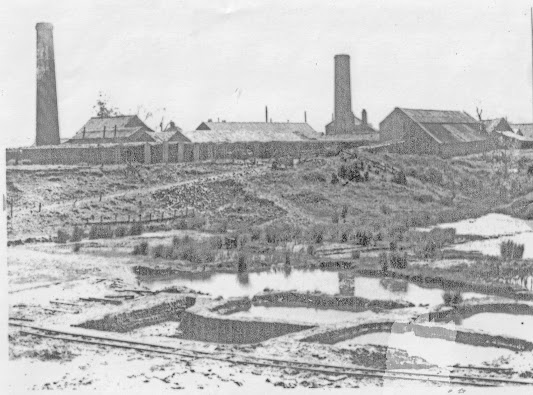


 Eastrington brickyard


Eastrington brickyard


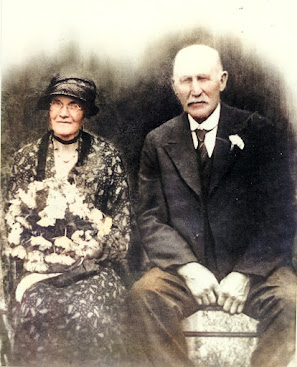
Walter and Elizabeth White


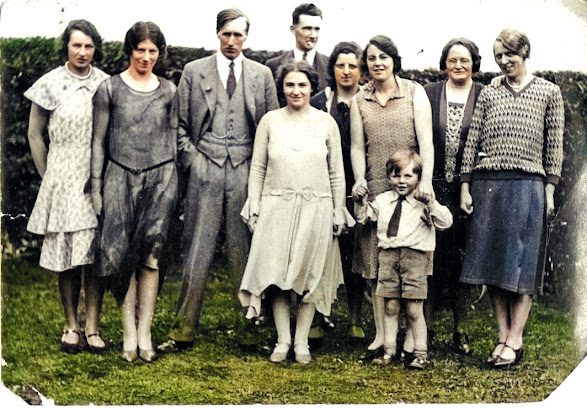
Taken on the lawn at Eastrington brickyard
Catherine 'Girlie' White, Phyllis Patchett, Cecil White, Jack Heald, Dorothy Heald, Dorrie White, Marie White, Barbara Brown
Front : Ethel Louise White, Johnson White

Wednesday, 12 October 2022

Howden history exhibition

And quite suddenly it is autumn. The leaves are coming off the trees - Molly brings them into the kitchen and drops them as a present for us on the floor. My hanging baskets are looking sad and we are inundated with apples. My favourites are those from my Improved Cockpit tree. When I was a child there was one in the garden at Eastrington and so we planted one here. It is a Yorkshire variety and has a unique  nutty/ liquorice flavour - it is versatile and can be used for both cooking and eating as a dessert apple.  

I was very sad to see that Eastrington chapel had been forced to close. The last service was on 25th September and I know of at least one lady who had been attending for well over 50 years. I have been given a collection of pictures  by  Mrs Doreen Wilde whose family, the Whites had been involved with the running of the chapel for  at least three generations. The Bell family of Portington, friends of John Wesley, had supported the chapel in earlier times. It is said that Wesley spent his last night in Yorkshire at Portington.

On the general  history front I seem to be juggling topics like plates.  I have been researching a Hull family for a local lady and have become entangled with a vast number of branches of  a family called Purdon.

And  nearer home I have been looking at the history of Howden. The Howden civic society is holding an exhibition in the Shire hall on Saturday and Sunday, 15th and 16th  of October about the heritage of the town. I have been printing out a lot of my old photographs in preparation.

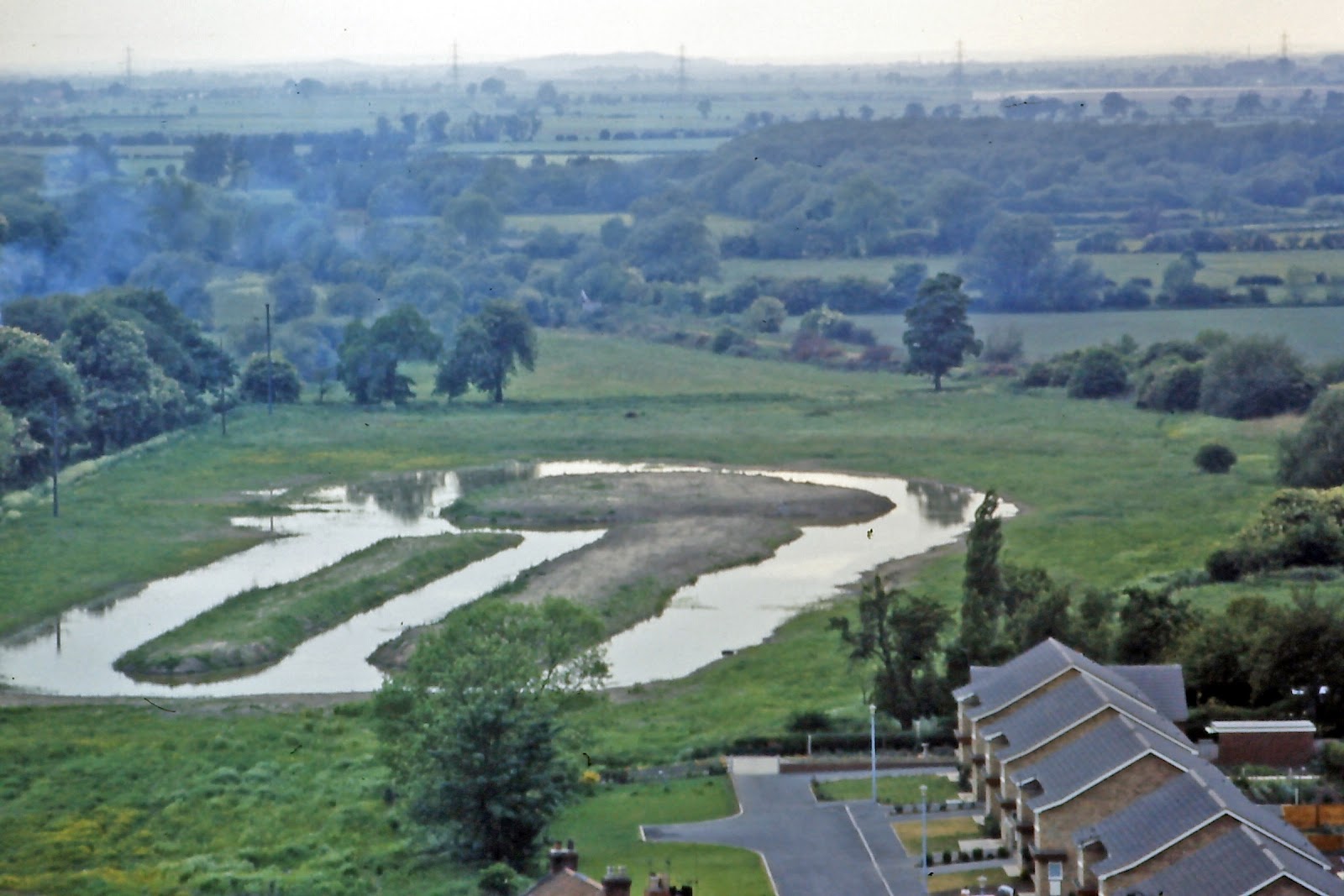
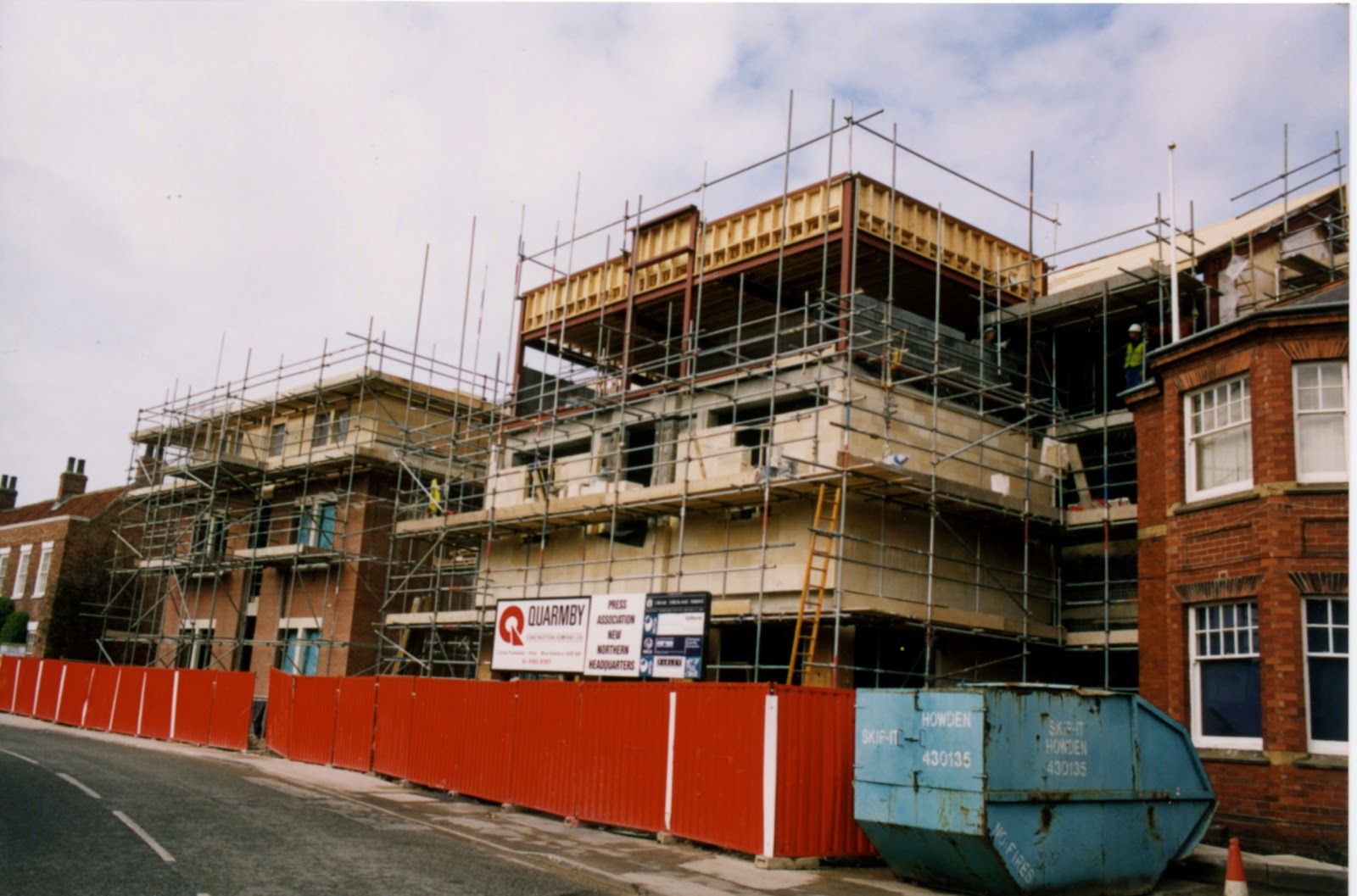
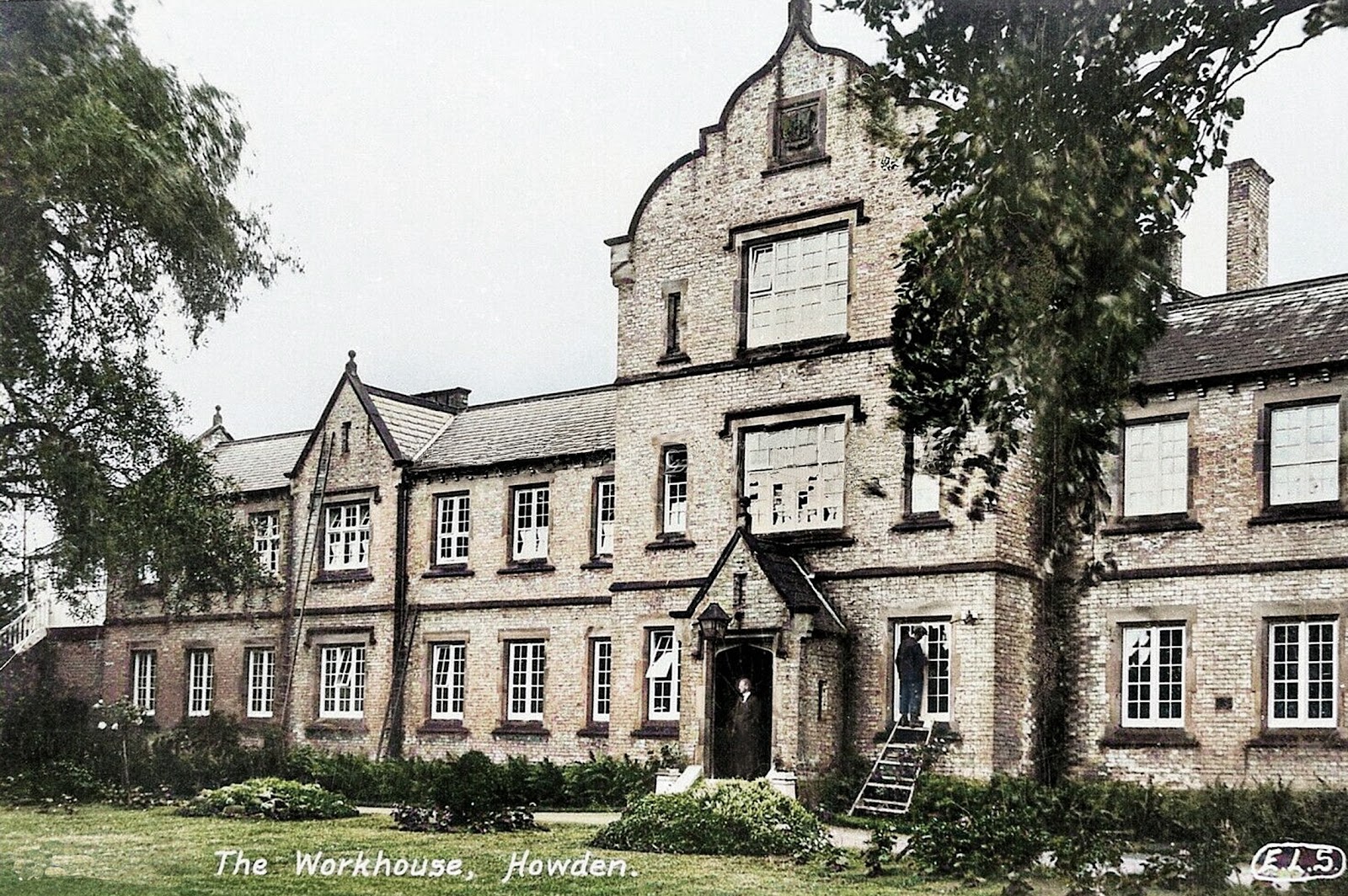
It is surprising how much Howden has changed in my time. Last evening I gave a talk to the members of Howden WI which I entitled The changing face of Howden and found that around half the audience had moved into Howden within the last ten years and were fascinated to see pictures of what Howden looked like before some of the newer developments. Examples are the demolition of the police station on Bridgegate and its replacement by the PA building; the site of the workhouse later the site of the ambulance station on Knedlington Road, now new houses and the Marsh as it was with its newly dug ponds but with no trees or bushes.

And not forgetting the history of Goole. Maybe not as old as Howden but our small research group has been looking at why Jackson Street and Montagu streets are so called. 


Plenty then to keep me busy when the clocks change and the evenings are darker.

 Howden marsh

 The old police station still just visible on the right


  The workhouse on Knedlington Road


Monday, 12 September 2022

Death of the queen

 When I began to write this post I had watched the Queen, frail but bright welcoming our new prime Minister. Then came the shocking news of her death only two days later. I think it will take some time for the news to sink in. Like so many I can only ever remember there being a Queen - indeed my middle name is Elizabeth. It is a strange time.

 I am already in fact quite late in writing this post -  I seem to have missed a month but have a good excuse as after managing to avoid Covid all this time I got it and have found it  more debilitating than I thought. Certainly more than a slight cold. I was very sorry to miss most of the Goole History group exhibition at the Junction in Goole as it was our first one for over two years and it's always nice to talk to people about the local history of the area.

The garden was, like everybody's, very dry but here in East Yorkshire we have had some heavy downpours recently and the grass is beginning to green up. My chickens, which I got as very young birds, will hardly know what to do when we do get rain but will, I hope, enjoy it when the weeds in their pen start to grow!

But  I  am now looking forward to the various history groups I go to in Goole and Skelton restarting after the summer break. Our first Thursday morning in Goole [22nd September] will be a chance for everyone to talk about their various summer projects whilst at Skelton [ 3rd October] we are beginning with a talk on Holme on Spalding Moor. Anyone interested in these groups is welcome to  send me a message through my website Howdenshirehistory.co.uk.

One of my own recent projects has been having a look at local mills. I have always been interested and someone on a local facebook page mentioned the mill at Goole Fields. I wrote a blog post about it many years ago - it was a tower mill known as Birks' mill and replaced  a smock mill which stood on the river bank.


 This is  Broadbent's mill, a smock mill,  which stood on the present site of Goole docks

Almost every village had its own mill and as it is so flat here it was ideally suited for windmills. Many initially were post mills but they were prone to blowing over.

I found a piece in the Hull newspaper after a terrible storm in January 1839. 

HOWDEN. One the pinnacles fell from the ruins the Collegiate Church ; some large pieces of lead were blown off the church roof; the streets were strewed with fragments of chimney-pots. In the country, we are sorry to learn, consequences more disastrous have been experienced. At Breighton, six barns were blown down, and one man bad his thigh broken, and another his leg fractured. Two barns were also blown down at Kilpin. The lofty chimney, belonging Mr. Ward's tannery, of Kilpinpike, fell down. The Hail Mill, near Howden, occupied by Mr. David Morritt, was blown down, and also two, others at Barmby. We are sorry to hear that seventeen mills have been blown down within ten miles of Howden. About forty or fifty large trees were blown down in the grounds of P. Saltmarshe, Esq. and the neighbourhood.

I tried to work out where these seventeen mills were and wished they had been named.  Several post mills were replaced by tower mills and some of these do survive, some converted in houses  [Heron's, Goole Fields and even a cafe [ Timms']. I have been trying to find pictures of some of them but sometimes all that remains is a name - Mill house or Mill lane.

I am presently on the trail of a postmill which stood in the south field of Hook in 1834. I have found it on an 1852 OS map [thanks  to my friends P and P] and think the site was under what is now the Hook railway bridge.

I have collected many pictures of tower mills but this one of Flatfield Mill at Howden is one of the few post mill pictures I have.

 
Howden, Flatfield Mill


And appropriately I was listening to the radio yesterday and there was an interview with a volunteer at Holgate Mill in York. He was explaining how there was a language of mill sails.   And how to leave the sails just past vertical was a sign of mourning- which they were going to do.  Although both the pictures I have put on here seem to have sails in that position!